World
Updates
By
Sean Beck
Nov 17, 2025
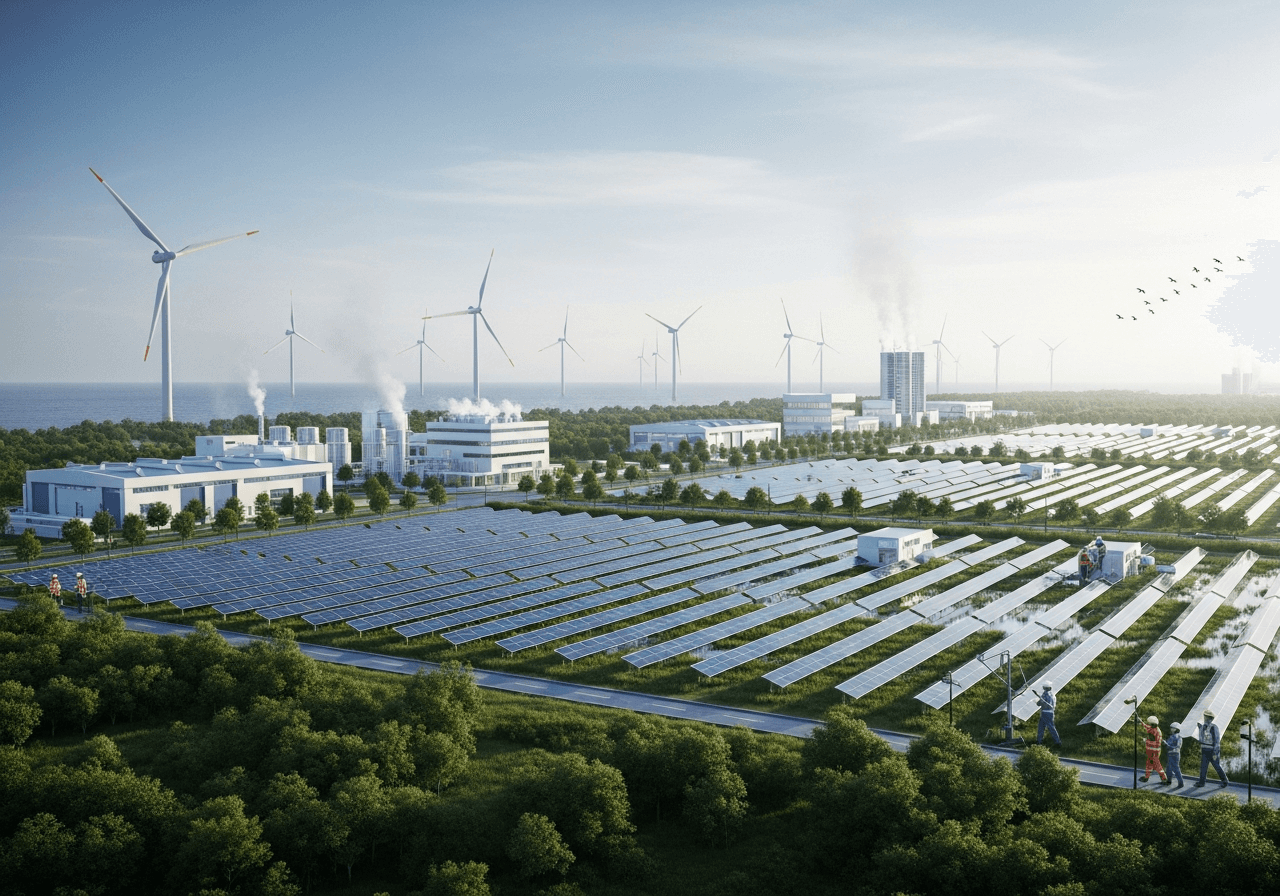
Vietnam is standing at a crossroads, a young and rapidly growing nation trying to balance its industrial expansion with the pressure to build a more sustainable future. Factories are rising, cities are spreading, and energy demand increases every year. Yet behind this surge of development, a quiet shift is slowly reshaping the country’s direction. The rise of green finance.
What once sounded like a niche economic idea is now becoming one of Vietnam’s most important tools for guiding its industrial transformation. Banks, government institutions, and international partners are starting to weave sustainability into the financial framework. The transition may be gradual, but the momentum is unmistakable.
At the core of this shift lies a simple truth. Vietnam can no longer grow the way it did before. Heavy dependence on fossil fuels has strained energy systems, polluted major cities, and triggered environmental challenges that affect millions. Floods, rising sea levels, and unpredictable weather patterns hit the country harder each year. The Mekong Delta, the heart of Vietnam’s agriculture, is threatened by saltwater intrusion and increasingly severe storms. The economic engine continues to run, but the environmental cost has become too great to ignore.
This is where green finance enters the picture. By channeling investment toward renewable energy, cleaner technologies, and low-carbon industry, Vietnam is attempting to rewrite its development blueprint. The effects are already visible. Solar fields are expanding across rural landscapes. Offshore wind turbines rotate steadily along the South China Sea. Companies are adopting cleaner production methods because banks offer better financing for sustainable projects.
For years, Vietnam’s industrial growth focused on speed and scale. Build fast, produce fast, export fast. Today, the mindset is shifting. Investors increasingly ask whether a project is sustainable. Global companies purchasing Vietnamese goods want greener supply chains. Local businesses are starting to notice that environmentally responsible products earn better market access. Banks, once reluctant, are adopting environmental risk assessments and green loan classifications because future markets demand it.
The transition is not without challenges. Many businesses still lack clear understanding of green standards. Financing gaps remain significant. Some industries worry about the cost of upgrading to cleaner systems. But the long-term benefits are undeniable. Lower emissions, more resilient infrastructure, and stronger alignment with international trade expectations offer a compelling path forward.
Vietnam’s government is also laying the foundation for a national green finance framework. It is an ambitious step that signals serious commitment to a sustainable economic model. The vision is straightforward. A future where economic development and environmental responsibility grow together instead of competing against each other.
This is what makes Vietnam’s current moment so compelling. It is not a perfect transition, but a determined one. A nation learning to steer its industrial momentum toward a cleaner and more resilient future. If the progress continues, Vietnam may become a regional leader in sustainable industry, showing that even fast developing economies can choose a greener path.
The shift has already begun. The real question now is how far Vietnam will take it.
Comments