Nature
World
By
Sean Beck
Oct 30, 2025
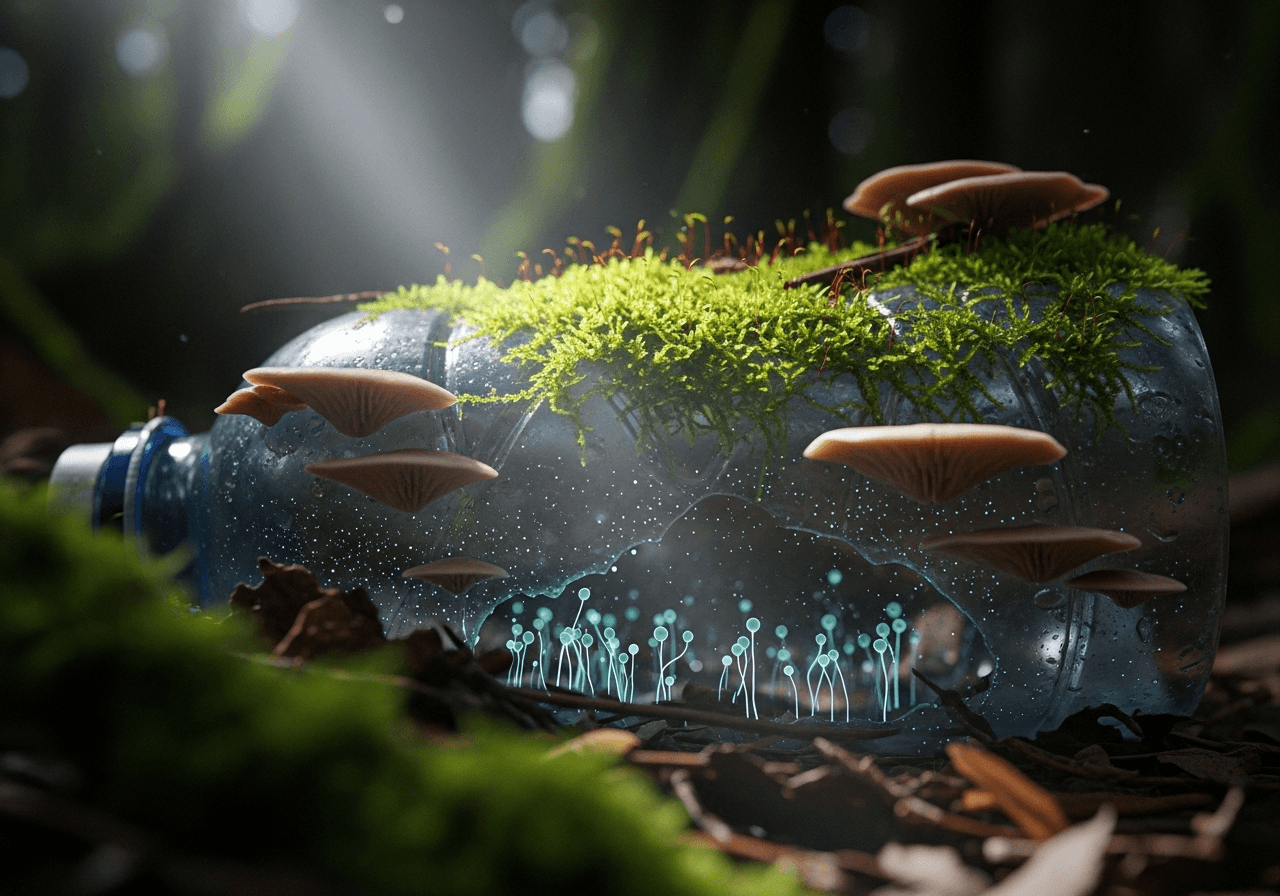
Plastic pollution is one of humanity’s most persistent problems. Billions of tons of plastic waste now blanket our oceans, landfills, and even the air we breathe. While recycling programs and bans on single-use plastics have helped, the sheer scale of the problem demands new, nature-based solutions. Recently, scientists have turned their attention to some of the planet’s smallest and least-noticed inhabitants—microbes and fungi—as potential allies in breaking down plastic waste.
The Plastic-Eating Microbes
In lakes across Europe and Asia, researchers have discovered several bacterial species capable of degrading synthetic polymers. One of the most famous is Ideonella sakaiensis, first identified in Japan in 2016. This tiny bacterium produces two enzymes, PETase and MHETase, which can break down polyethylene terephthalate (PET)—the main ingredient in many bottles and packaging materials—into simpler substances the microbe can then consume. Since then, other species such as Pseudomonas aeruginosa and Flavobacterium have been found to possess similar capabilities.
In a surprising twist, scientists recently discovered strains of Pseudomonas in hospital wastewater that can “eat” certain plastics. Though these bacteria are better known as opportunistic pathogens, the enzymes they produce are proving useful for environmental cleanup. Bioengineers are now studying these naturally occurring enzymes to create safer, genetically modified versions that can be deployed on a large scale without ecological risk.
The Role of Fungi
Fungi are equally fascinating in their potential to combat plastic waste. Unlike bacteria, many fungi can survive in harsh, low-oxygen environments—like landfills—where most plastic waste ends up. Species such as Pestalotiopsis microspora, discovered in Ecuadorian rainforests, can digest polyurethane (a common component in foams, coatings, and adhesives). This fungus can survive entirely on plastic as its sole carbon source, even deep underground where little oxygen is available.
Another example, Aspergillus tubingensis, has been observed breaking down plastic film within weeks in laboratory conditions. By secreting enzymes that cut through the molecular bonds of plastics, these fungi reduce complex polymers into smaller fragments that can then be mineralized by other organisms.
The Science of Biodegradation
Biodegradation of plastics by microbes and fungi isn’t instantaneous—it’s a slow, chemical process that depends on factors like temperature, pH, and oxygen availability. Still, scientists are making remarkable progress in understanding how these organisms interact with plastics. Using advanced imaging and genetic sequencing, researchers can now observe exactly how enzymes latch onto polymer chains and begin breaking them apart.
The next challenge lies in scaling up these discoveries. Lab experiments show promise, but applying them in the real world requires stable, safe ecosystems where engineered microbes won’t disrupt natural biodiversity. Some pilot projects are exploring “bio-reactors” where engineered bacteria or fungi digest plastic waste under controlled conditions, producing harmless by-products or even raw materials for new bioplastics.
A Symbiotic Future
While these biological solutions are exciting, experts emphasize that they’re only part of the puzzle. Even if microbes could one day eat all our waste, the best solution remains prevention: producing less plastic, reusing more, and designing materials that are biodegradable from the start. Yet the discovery that nature has already evolved ways to digest our most persistent pollutants gives hope—and perhaps a hint that, with science and nature working together, a cleaner planet might still be within reach.
Comments