World
News
By
Sean Beck
Oct 20, 2025
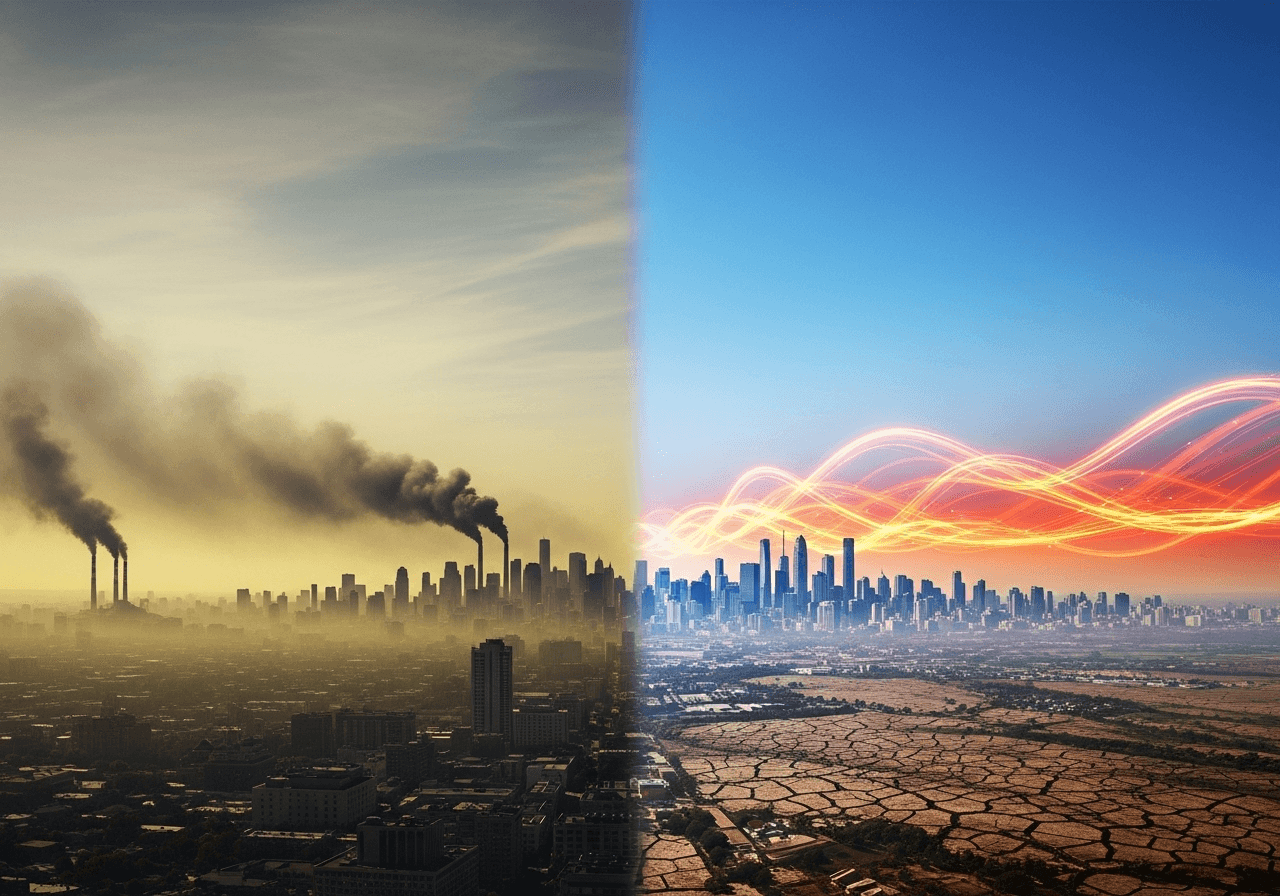
Efforts to clear the air of harmful pollution are essential for public health, but scientists warn they could also have unexpected consequences for the climate. Reducing aerosols — the tiny particles produced by burning fossil fuels, industrial activity, and natural processes — may unintentionally speed up global warming.
Aerosols play a complex role in Earth’s atmosphere. Some, like black carbon or soot, absorb sunlight and contribute to warming. Others, such as sulphates, reflect sunlight away from the planet, creating a temporary cooling effect that masks some of the warming caused by greenhouse gases. When nations enact stricter air-quality policies or switch to cleaner fuels, they often reduce these reflective aerosols faster than they cut carbon emissions — exposing the underlying heat that has been partially hidden for decades.
This delicate balance creates what scientists call the “aerosol dilemma.” Cleaner air improves human health and visibility but can also lead to a short-term rise in surface temperatures. For instance, the global shift toward low-sulphur fuels in shipping has significantly improved air quality, yet it also reduced the reflective particles that once helped cool parts of the ocean and atmosphere.
Experts emphasize that air-quality policies and climate policies must work together rather than separately. Cutting aerosols without simultaneously reducing greenhouse gases could make the planet heat up even faster. Coordinated strategies that address both issues — such as targeting methane and black carbon emissions, improving monitoring systems, and integrating environmental planning — are key to maintaining both a healthy atmosphere and a stable climate.
The lesson is clear: cleaner skies cannot come at the cost of a hotter planet. Solving air pollution and the climate crisis requires a unified approach that protects people today while safeguarding the future of the Earth’s climate.
Comments