World
News
By
Sean Beck
Nov 7, 2025
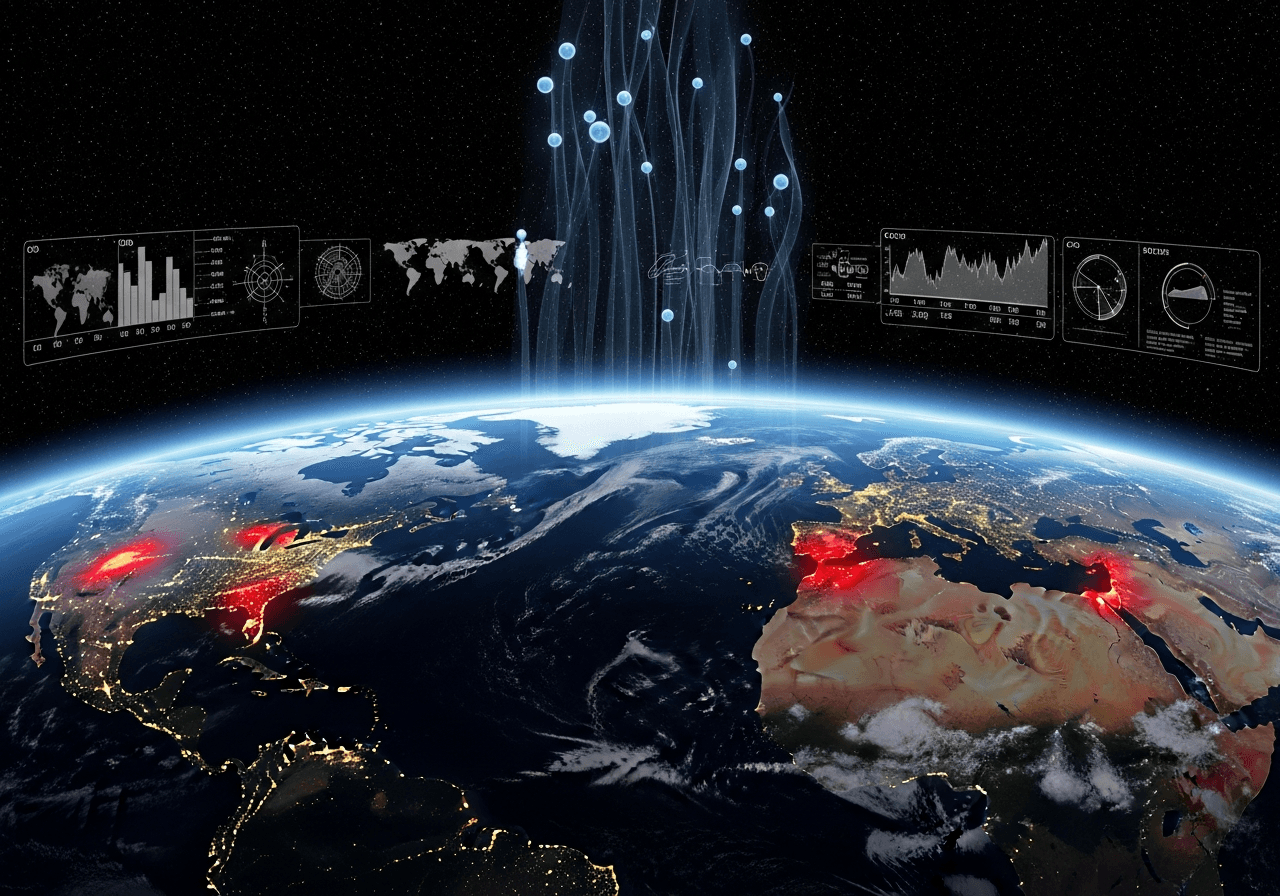
A relentless rise in global temperature signals an era of escalating climate extremes — and the world is running out of time to act.
The World Meteorological Organization (WMO) has confirmed that 2025 is on course to become the second or third hottest year ever recorded. From January to August, the planet’s average surface temperature was roughly 1.42 °C higher than the pre-industrial baseline, continuing a record-breaking streak of global heat that shows no signs of slowing down.
The period from 2015 to 2025 is now officially the warmest 11-year stretch in recorded history. Scientists point to a combination of greenhouse gas buildup, ocean heat retention, and feedback effects from melting ice and drying land surfaces as key drivers behind this persistent trend.
Despite the fading of the intense El Niño event that fueled 2023–2024’s record temperatures, global heat levels remain alarmingly high in 2025. The oceans, which absorb about 90 % of excess heat trapped by greenhouse gases, continue to set new records for warmth — fueling marine heatwaves, coral bleaching, and disrupted weather patterns across continents.
The implications are profound. Rising global temperatures are increasing the frequency and severity of heatwaves, droughts, wildfires, and storms, while sea levels continue to climb at an accelerating pace. Polar regions are also suffering unprecedented ice loss, and scientists warn that several climate tipping points — such as Arctic ice melt and permafrost thaw — are inching dangerously close.
The WMO warns that keeping global warming below 1.5 °C, the target outlined in the Paris Agreement, is becoming increasingly difficult without dramatic emission cuts. Every fraction of a degree counts: a difference between 1.5 °C and 2 °C could mean millions more people exposed to extreme heat, rising food insecurity, and the collapse of critical ecosystems.
Still, experts emphasize that it’s not too late to act. Rapid reductions in fossil fuel use, large-scale renewable energy transitions, reforestation, and the protection of natural carbon sinks could stabilize global temperatures in the long term. Early-warning systems and adaptation strategies, especially in vulnerable regions, are also essential to reduce human and economic losses.
The message from scientists is clear — the climate crisis is accelerating, and the next few years will determine whether the world can still bend the curve toward a livable future.
Comments