World
Updates
By
Sean Beck
Nov 12, 2025
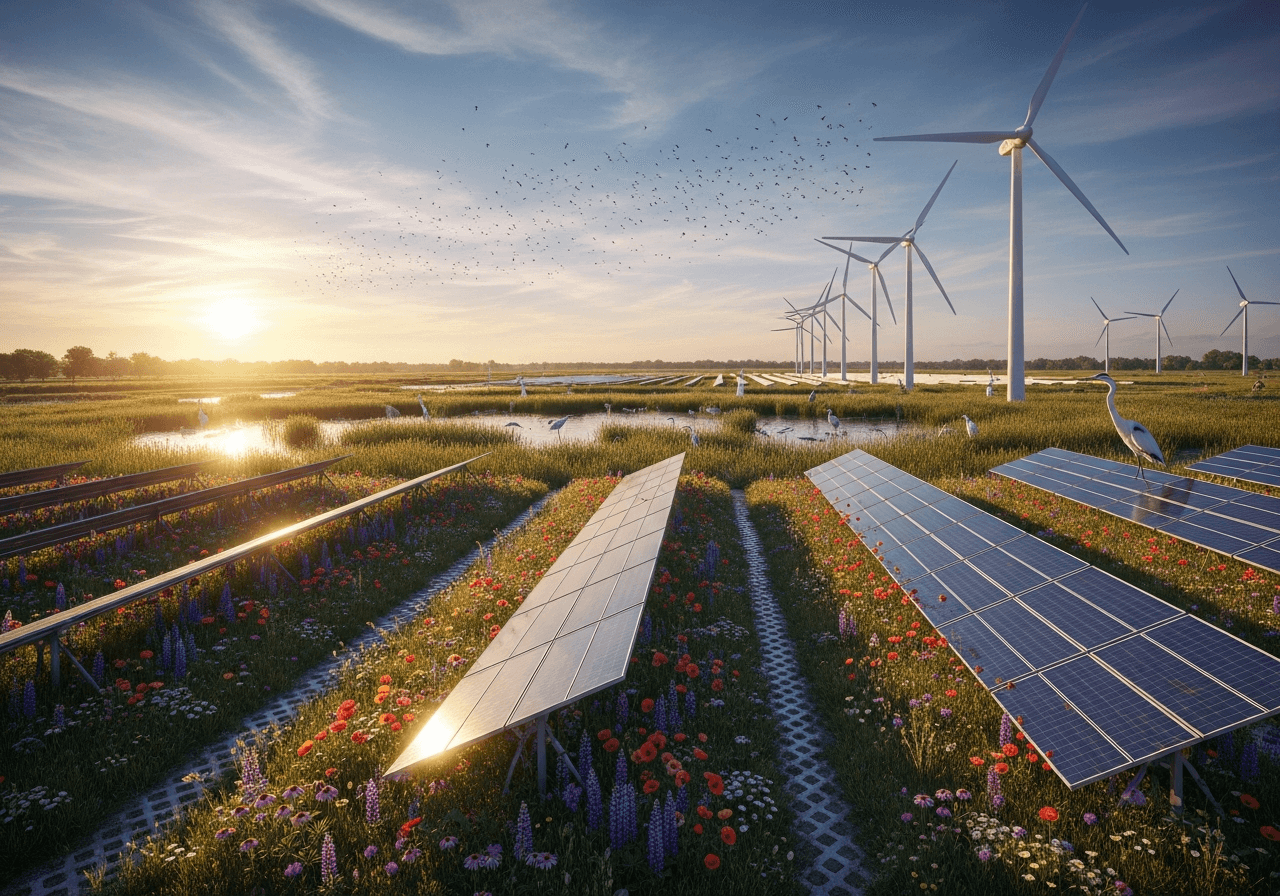
As the world races toward a carbon-neutral future, a new global environmental forum has placed a spotlight on a groundbreaking concept: “nature-positive renewables.” This emerging approach emphasizes that renewable energy expansion — such as solar farms, wind turbines, and hydroelectric systems — must not only reduce emissions but also restore ecosystems and protect biodiversity along the way.
Rethinking Renewable Energy
In recent years, renewable energy has been celebrated as the solution to climate change. However, experts now warn that rapid deployment without ecological consideration can still harm local ecosystems. Large solar installations may replace natural habitats, offshore wind projects can disturb marine life, and hydropower dams often alter river systems.
“Renewable energy cannot come at the expense of nature,” one keynote speaker at the forum emphasized. “We must ensure that our solutions to one crisis do not worsen another.”
The idea behind nature-positive renewables is to integrate environmental restoration directly into energy planning — such as planting native vegetation under solar panels, restoring mangroves around coastal wind farms, or designing wildlife-safe turbine layouts.
The Forum’s Main Takeaways
Integrating biodiversity targets into renewable energy policies. Governments are being urged to include biodiversity metrics in their clean-energy strategies to ensure balanced progress.
Promoting regenerative energy landscapes. Developers are encouraged to design projects that improve soil health, water cycles, and carbon sequestration rather than simply occupying land.
Collaboration across sectors. The forum highlighted the importance of uniting climate scientists, conservationists, and engineers to develop solutions that serve both people and the planet.
This holistic perspective aims to create a win-win scenario — where renewable energy not only powers economies but also revives natural systems that sustain life.
A Call for Global Action
Participants from more than 80 countries agreed that nature-positive strategies are critical to meeting both the Paris Agreement and the Kunming-Montreal Global Biodiversity Framework goals. Without biodiversity protection, the resilience of the planet’s ecosystems — including forests, wetlands, and oceans — could collapse under combined human and climatic pressures.
“The path forward must be regenerative, not just sustainable,” stated a representative from the International Union for Conservation of Nature (IUCN). “Every new renewable project should leave the land richer, not poorer.”
As the world prepares for COP30 in Brazil next year, this vision of aligning climate and biodiversity goals could redefine how we think about clean energy — turning it from a single-purpose tool into a restorative force for the planet.
Comments