Nature
World
By
Sean Beck
Nov 27, 2025
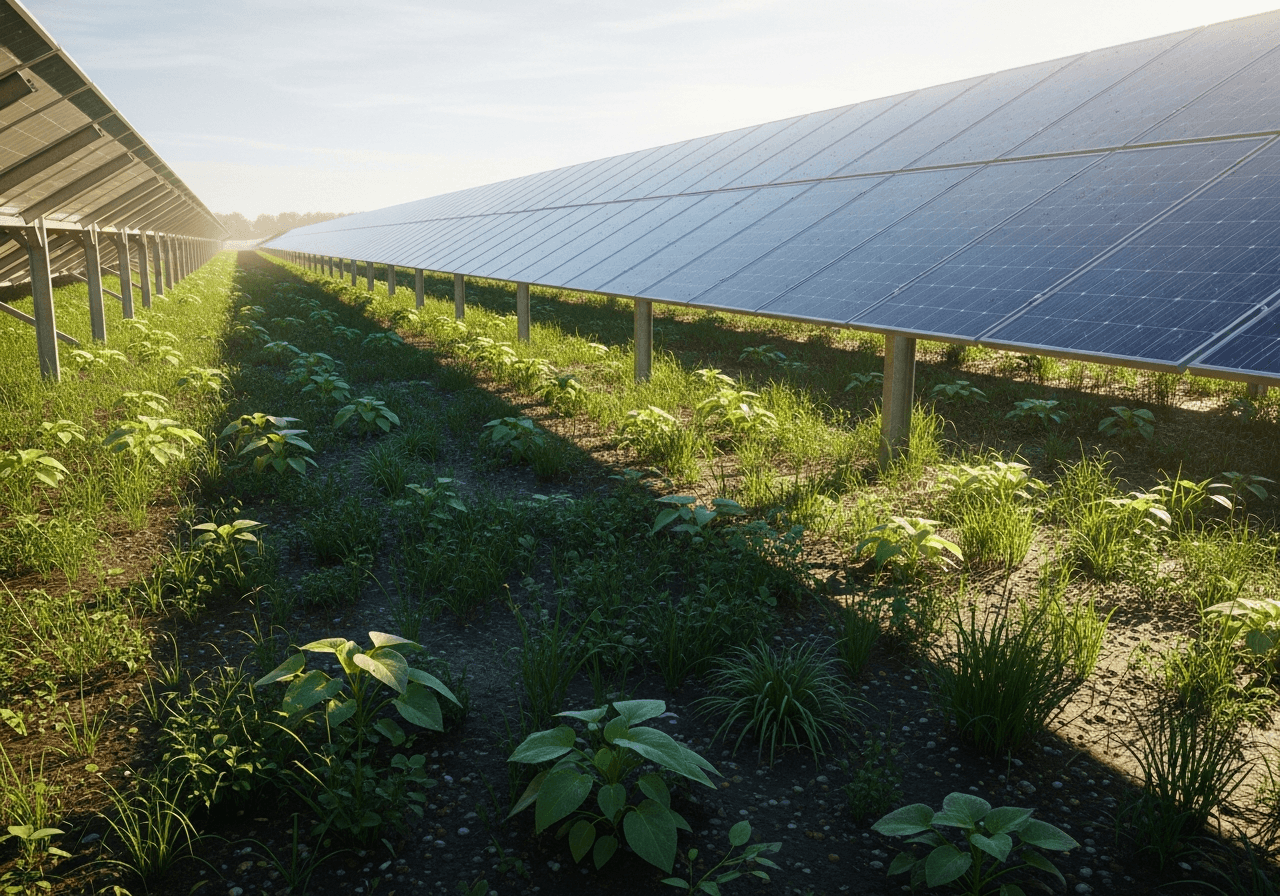
Across dry plains, farmlands, and open fields, solar farms rise like silent geometric forests. Rows of dark panels tilt toward the sun, capturing light and turning it into clean power. But beneath those panels, something unexpected is happening. The soil is healing. What looks like a simple renewable energy installation is also creating a hidden microclimate that improves soil moisture, protects plant life, and restores land that might otherwise degrade over time.
When sunlight hits the ground directly throughout the day, the soil heats up quickly. Moisture evaporates. Microorganisms suffer. Plants struggle to survive. But solar panels cast shifting patches of shade that reduce temperature spikes and slow down evaporation. Under this cooler atmosphere, the soil holds onto precious water longer. Seeds germinate more easily. Even in harsh environments, small plants gain protection from intense sunlight and heat.
Scientists who study agrivoltaics, a field that combines agriculture and solar energy, have observed that these shaded zones support healthier soil ecosystems. Microbes thrive because they face less heat stress. Organic matter breaks down more efficiently. Worms return to areas that were once too hot and dry. Over time, the land beneath solar arrays can become more fertile than the surrounding exposed ground.
The panels themselves act like gentle guardians. They intercept the harshest hours of sunlight while allowing indirect light to reach the soil. Rainfall flows between the rows, keeping the ground hydrated without washing nutrients away. In some regions, farmers plant shade-tolerant crops beneath the panels and report higher yields thanks to better moisture retention. The combination of electricity generation and soil improvement turns solar farms into surprising dual-purpose landscapes.
This cooling effect becomes especially valuable in regions facing rising temperatures. As climate change intensifies heatwaves, soil degradation threatens food security and ecosystem resilience. By creating cooler microclimates, solar farms offer a passive yet powerful solution. They help land recover. They reduce erosion. They make dry areas more hospitable for life.
The transformation is subtle. A visitor might see only panels and metal frames. But beneath the surface, the land is doing something remarkable. It is responding to shade the way forests shelter their own floors. Soil softens. Plants return. Life begins to rebuild itself.
This quiet partnership between technology and nature reveals an important truth. Renewable energy does not have to replace natural systems. It can work with them. Solar farms that generate electricity also create living spaces that help restore the ground beneath them. In a warming world, this synergy is more than an advantage. It is a sign of how future landscapes can be designed with intelligence, balance, and respect for the ecosystems that support us.
Comments