World
News
By
Sean Beck
Nov 6, 2025
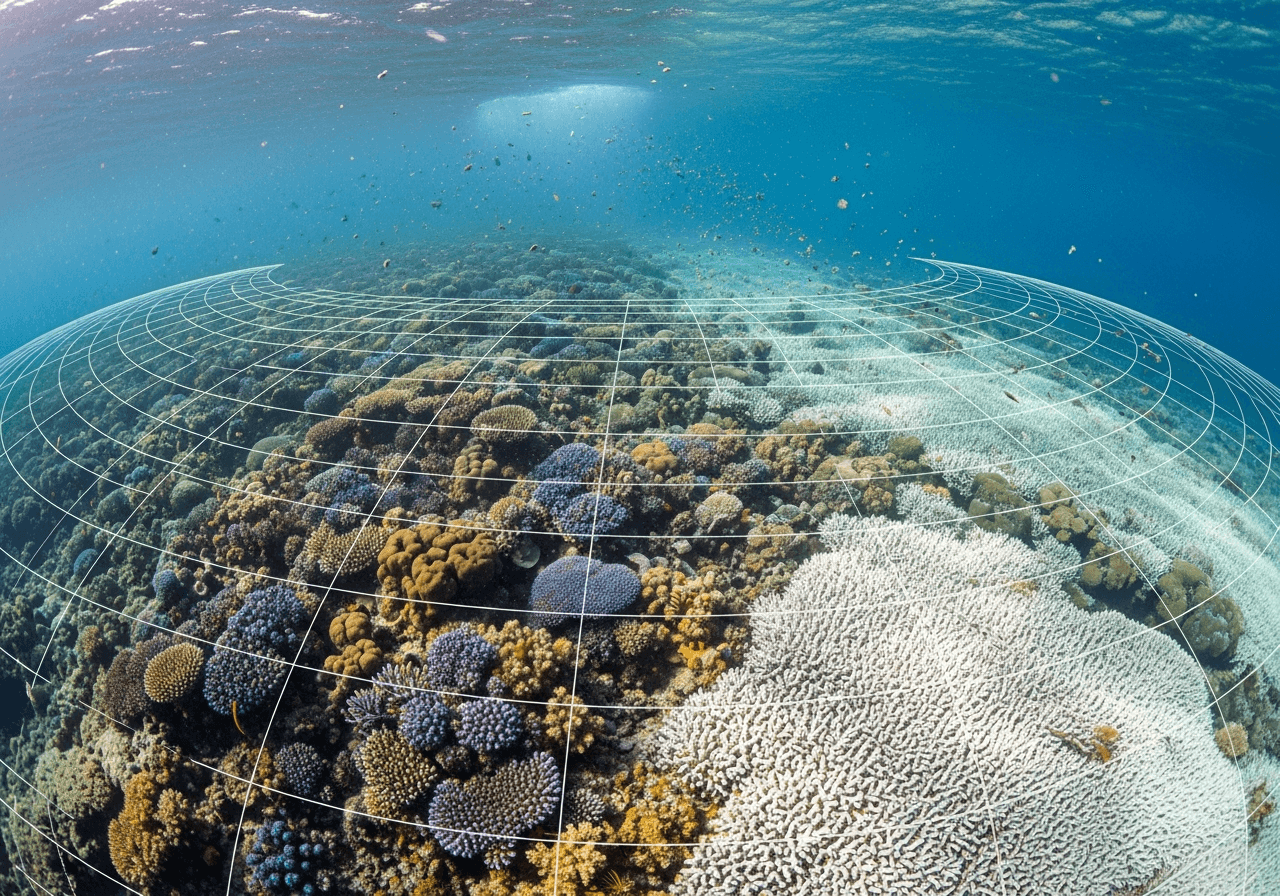
Australia’s most iconic marine ecosystem faces a critical tipping point — yet science says there’s still a narrow path to survival if humanity acts fast.
A new study from the University of Queensland (UQ) has delivered one of the most advanced simulations ever conducted on the Great Barrier Reef (GBR) — a UNESCO World Heritage Site that spans over 2,300 kilometers and supports thousands of marine species. Using high-resolution ecosystem models, researchers examined how the reef might respond to different climate scenarios throughout the 21st century, factoring in temperature rise, ocean currents, coral connectivity, water quality, and predator outbreaks such as the crown-of-thorns starfish.
Their findings are both alarming and insightful. Under a “business-as-usual” scenario, where greenhouse gas emissions continue on their current trajectory, the majority of the GBR could undergo severe coral bleaching events every few years, leading to widespread ecological collapse by the 2080s or earlier. Coral recovery, which once took decades, may become virtually impossible as heat stress outpaces natural regrowth.
However, if global warming is successfully limited to below 2 °C, large sections of the reef could still recover and maintain partial ecological function. The models suggest that regional refuges — cooler areas with strong upwelling and high larval exchange — may serve as “seed banks” for coral repopulation, helping sustain biodiversity even as other sections struggle. This offers a glimpse of hope, but only if global emissions peak within the next decade and local conservation efforts are dramatically strengthened.
The research underscores that local management still matters. Reducing coastal pollution, improving water quality, and curbing destructive fishing practices can boost coral resilience and buy valuable time. These interventions help corals better withstand bleaching events, though they cannot offset unchecked carbon emissions on their own.
Another key insight from the study involves the interconnected nature of the reef system. The Great Barrier Reef is not a single uniform habitat but a mosaic of thousands of individual reefs linked through larval flow. When this connectivity breaks down — due to habitat loss or temperature extremes — recovery potential plummets. Hence, protecting these natural “corridors” is crucial to maintain the reef’s adaptive capacity.
While the outlook remains dire, scientists stress that it’s not yet too late. Coordinated climate action, aggressive emission reductions, and sustained investment in marine restoration can still secure a future for the GBR. The reef’s fate, however, now lies squarely in the balance between human ambition and environmental inertia.
Comments