News
Updates
World
By
Sean Beck
Feb 2, 2026
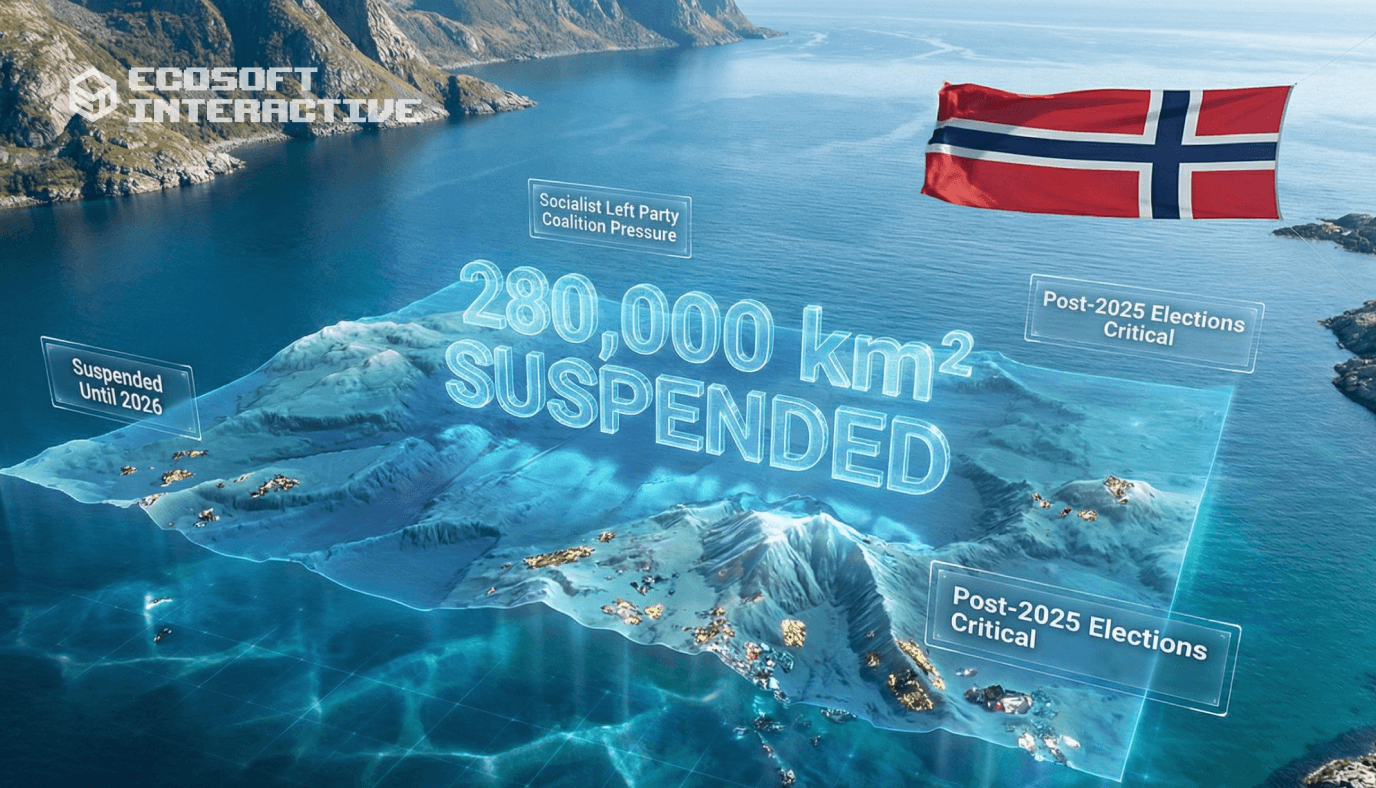
The Norwegian government announced a deep sea mining ban through 2029, marking a major policy reversal for the former industry supporter.
Norway’s government announced it will ban all deep sea mining exploration and development in Arctic waters until at least the end of 2029. The decision came after pressure from environmental groups and negotiations with green opposition parties in the country’s parliament.
The agreement stops all work related to finding and extracting minerals from the ocean floor in Norwegian waters. The government will also end public funding for mapping deep sea minerals, marking a major policy reversal for a nation that previously supported the mining industry.
“Deep sea mining in Norway has once again been successfully stopped,” said Haldis Tjeldflaat Helle, Deep Sea Mining Campaigner at Greenpeace Nordic. “We will not let this industry destroy the unique life in the deep sea, not in the Arctic nor anywhere else.”
Deep sea mining involves using heavy machinery to extract minerals like cobalt, nickel, and rare earth elements from the ocean floor, typically at depths of 200 to 6,500 meters below the surface. Companies want these materials for batteries and electronics, but scientists warn the process could destroy fragile ecosystems that take centuries to recover.
The Norwegian decision adds to growing global resistance against deep sea mining. In November 2024, the Cook Islands extended application review periods by five years, pushing any potential mining in Pacific waters to at least 2032. More than 40 countries now support a global pause on deep sea mining activities.
Norway’s previous government had agreed to stop the first licensing round for deep sea mining in 2024 after an international campaign and budget negotiations with the Socialist Left party. The new government’s decision extends this pause for at least four more years following negotiations with three green opposition parties: the Reds, the Socialist Left Party, and the Green Party.
The deep sea mining ban represents a significant challenge to an industry that argues these minerals are essential for renewable energy technology. However, experts point to recycling as a viable alternative that could meet demand without destroying ocean ecosystems.
Current electronic waste contains substantial amounts of valuable minerals. Studies show that recycling existing electronics could recover up to 80 percent of the cobalt, copper, and nickel currently locked in discarded devices. A single metric ton of circuit boards contains more gold than 17 metric tons of ore from traditional mining operations.
Despite these numbers, global recycling rates for electronics remain below 20 percent. Improving collection and processing systems could provide the minerals needed for batteries and renewable energy infrastructure without the environmental risks of deep sea mining. The European Union recovered approximately 44 pounds of raw materials per person from recycled electronics in 2023, but experts estimate this could triple with better systems.
Norway’s deep sea mining ban comes as the International Seabed Authority faces increasing scrutiny over its role in regulating mining in international waters. This United Nations body, established under the 1982 Law of the Sea Convention, controls mining rights in areas beyond national jurisdiction, which cover roughly 54 percent of the world’s ocean floor.
The International Seabed Authority has been developing mining regulations since 2014, but progress has slowed as environmental concerns have grown. The organization must balance the interests of countries that want access to deep sea minerals with the growing number of nations calling for protection. Jamaica currently hosts the Authority’s headquarters, and its 168 member states include most United Nations members.
Several countries have applied for exploration licenses through the International Seabed Authority to survey potential mining sites in international waters. However, no exploitation licenses have been granted, and the regulatory framework remains incomplete. Norway’s domestic deep sea mining ban adds pressure on the Authority to prioritize environmental protection over industry interests.
The mining industry faces increasing challenges before operations have even begun. Environmental groups argue that deep sea mining would damage unique ocean life that scientists are still working to understand. Many deep sea species live nowhere else on Earth and reproduce slowly, making them vulnerable to extinction if their habitats are destroyed.
“This must be the nail in the coffin for the deep sea mining industry in Norway,” Helle added. “Any government that is committed to sustainable ocean management cannot support deep sea mining.”
Greenpeace International called on Norway to go further by joining the international call for a global moratorium. “Millions of people across the world are calling on governments to resist the dire threat of deep sea mining to safeguard oceans worldwide,” said Louisa Casson, Deep Sea Mining Campaigner at Greenpeace International. “This is yet another huge step forward to protect the Arctic, and now it is time for Norway to join over 40 countries calling for a moratorium and be a true ocean champion.”
The Arctic deep sea contains unique ecosystems adapted to extreme cold, darkness, and pressure. Scientists have discovered new species in these waters in recent years, but researchers estimate they have explored less than 20 percent of the ocean floor globally. Environmental groups argue that allowing mining before understanding these ecosystems could cause irreversible damage.
The mining industry maintains that deep sea minerals are necessary for the transition to renewable energy, as they are used in electric vehicle batteries and wind turbines. However, critics point to growing evidence that recycling existing materials and reducing consumption could meet demand without destroying ocean habitats.
Norway’s decision reflects changing attitudes about ocean protection. The country built its modern economy on offshore oil and gas extraction, but younger generations increasingly prioritize environmental conservation over resource development. This shift in public opinion has given green parties more influence in government negotiations.
The four-year pause gives scientists more time to study deep sea ecosystems and gives policymakers time to develop international regulations if mining eventually proceeds. It also provides breathing room for companies to prove they can extract minerals without causing environmental catastrophe.
Environmental groups plan to use the extension to build support for a permanent ban on deep sea mining in Norwegian waters and to strengthen the global movement for ocean protection. They argue that the precautionary principle should apply: when an activity risks serious environmental harm, lack of full scientific certainty should not prevent protective measures.
The Norwegian government has not specified what conditions would need to be met for mining to proceed after 2029. Environmental groups hope Norway’s deep sea mining ban will become permanent as scientific evidence of impacts continues to accumulate and as recycling technology improves to provide the minerals needed for renewable energy without ocean destruction.
Comments