World
News
By
Sean Beck
Oct 24, 2025
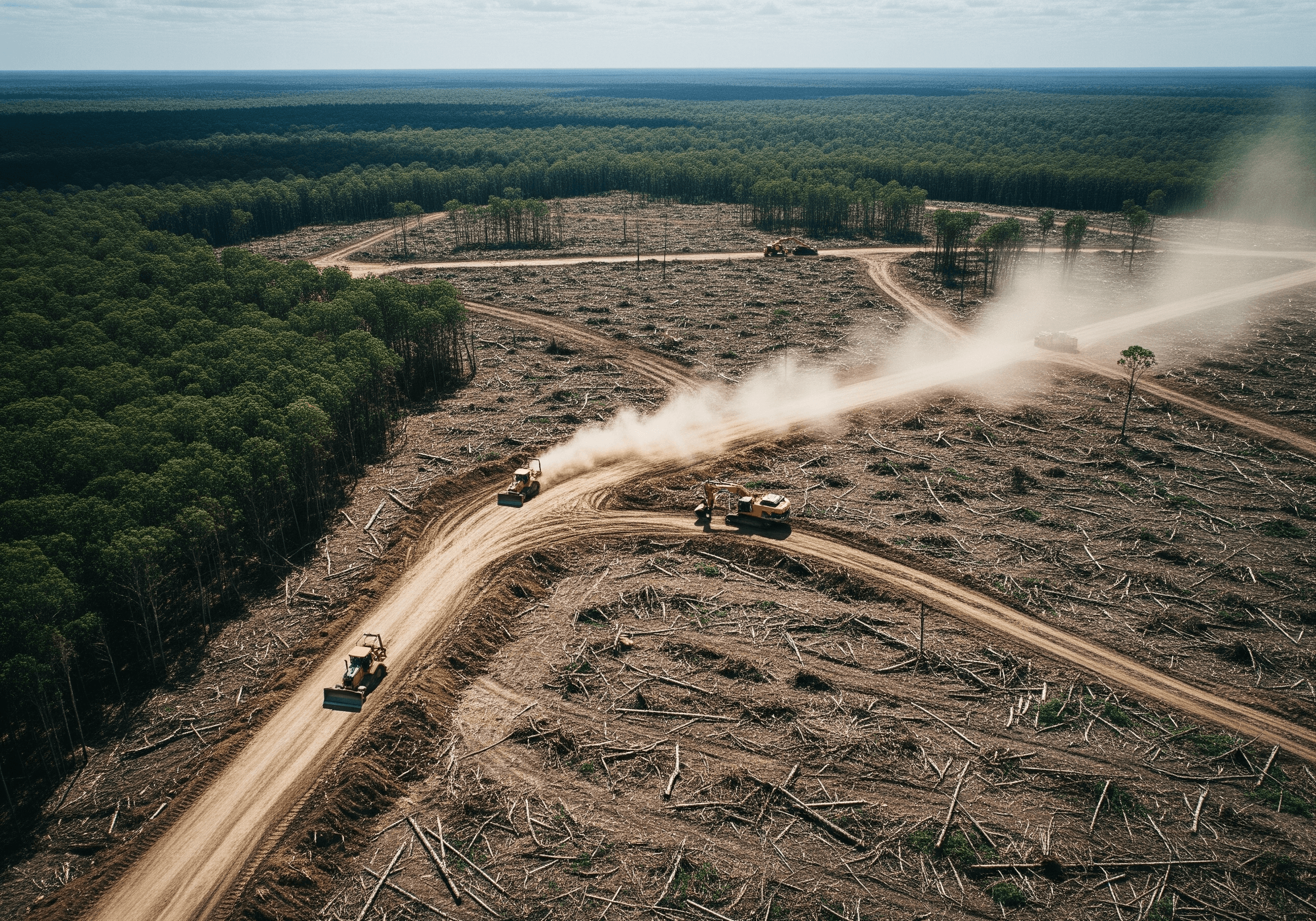
Despite being celebrated for its new national parks, Queensland remains a major global hotspot for forest and vegetation clearing. Recent research shows that the state has lost at least 21% of its original woody vegetation since European colonisation. Worryingly, one-fifth of that loss has occurred since 2000 — even as the total area of protected lands has more than doubled.
The problem lies not only in the scale of clearing, but in where it is happening and how protections are being applied. Many of the new parks are located in areas already under lower threat — while landscapes undergoing rapid clearing, like the Brigalow Belt and parts of the south-west Mulga Lands, have received little additional protection. For every 20 hectares cleared, only about 10 hectares are being newly protected.
In heavily-cleared regions, vast stretches of native woodland have been turned into grazing land or infrastructure zones, often home to threatened plants and animals. Species such as the northern hairy-nosed wombat and certain legless lizards are squeezed into ever-smaller habitat pockets. Meanwhile, the state’s south-eastern suburbs continue to lose bushland rapidly — sometimes to urban development and sometimes to pasture expansion.
The situation reflects a wider truth: simply creating more parks is not enough. Without bold action to halt clearing, restore degraded land, and prioritise protection of the most threatened ecosystems, the net outcome for nature remains negative. Real progress will depend on targeted protection of high-risk zones, restoration of ecosystems under duress, and transparent accounting of both losses and gains.
Queensland stands at a crossroads. While the expansion of protected areas is welcome, it must be matched by meaningful action in landscapes facing the most pressure. Otherwise the bulldozers will keep working behind the scenes — and even the best-intentioned park announcements will ring hollow. The time to act is now, not just for parks in quiet corners, but for the forests at greatest risk.
Comments