Nature
World
By
Sean Beck
Oct 27, 2025
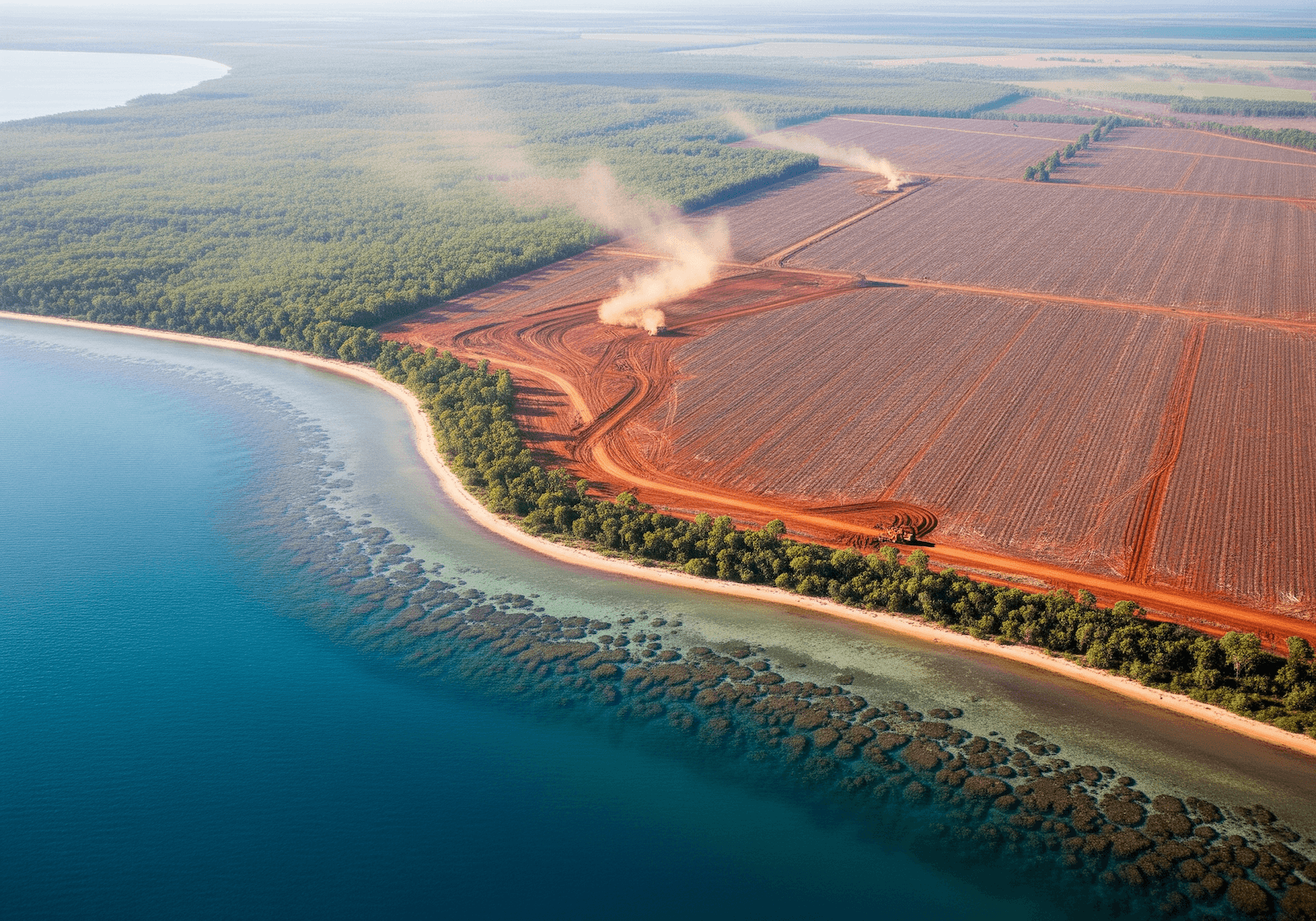
Deforestation across Queensland’s Great Barrier Reef catchments has reached alarming levels, putting the world’s largest coral reef system at risk of being listed as “in danger” by UNESCO. Recent analysis reveals that nearly 700,000 hectares of native vegetation were cleared between 2018 and 2022 — much of it in areas critical to the reef’s water quality.
This large-scale clearing has serious environmental consequences. When forests and native bushland are removed, soil and sediment wash into nearby rivers during rainfall, eventually flowing into the Great Barrier Reef lagoon. These sediments cloud the water, block sunlight, and smother coral reefs and seagrass beds — vital habitats that sustain marine life and support local fisheries and tourism.
Despite efforts to protect the reef through restoration programs and water-quality initiatives, the rate of clearing continues to outpace conservation gains. Experts warn that while new national parks have been established in Queensland, many are located in areas under less immediate threat. The regions facing the most intense deforestation — such as the Brigalow Belt and Mulga Lands — remain largely unprotected and vulnerable to land clearing for agriculture and pasture expansion.
The situation highlights a deeper issue: creating parks alone is not enough. Effective protection requires stricter regulation of land use, enforcement of vegetation laws, and restoration of degraded catchments. Stronger national standards under Australia’s environment laws are essential to curb deforestation and ensure that industrial and agricultural development no longer comes at the expense of the reef’s survival.
As climate change intensifies ocean heat stress and coral bleaching, continued tree clearing only worsens the problem. The Great Barrier Reef is more than a natural wonder — it’s a living system that supports thousands of species and sustains livelihoods across northern Australia. Protecting it demands decisive action now, before deforestation pushes this fragile ecosystem beyond recovery.
Comments