World
News
Updates
By
Sean Beck
Dec 24, 2025
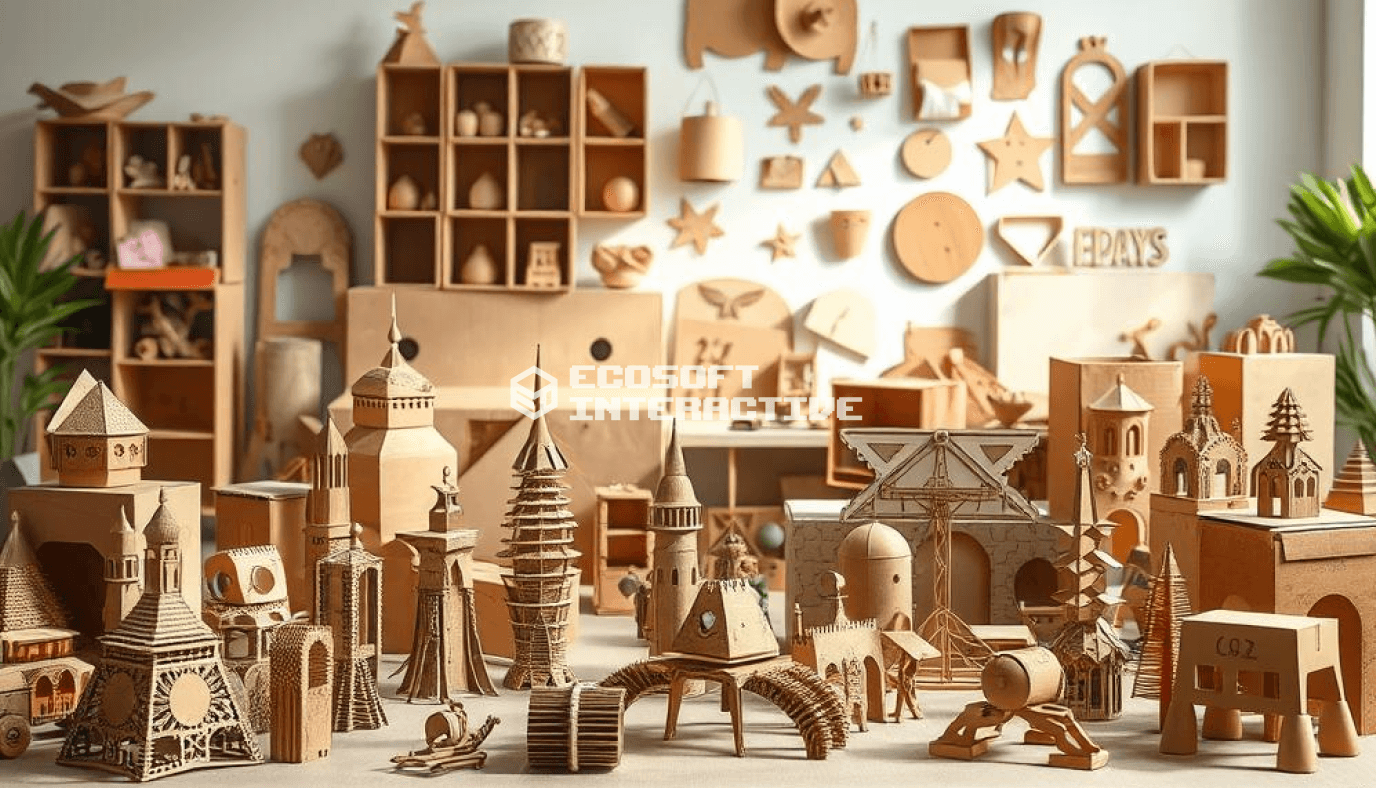
New cardboard building materials honour Indigenous construction traditions while solving modern waste and climate challenges in the building industry.
Australian researchers have developed a revolutionary construction method using cardboard building materials, sourced from recycled boxes, dirt, and water. The new material cuts carbon pollution by roughly three quarters compared to traditional concrete while keeping mountains of cardboard out of landfills.
The team at RMIT University refers to their creation as cardboard-confined rammed earth. It works by packing moist soil inside cardboard tubes or forms, either by hand or with machinery. Once the earth dries and hardens, the cardboard stays in place as part of the finished wall. The entire structure can be torn down and reused when a building reaches the end of its life.
Australia throws away more than two million tons of cardboard and paper every year. At the same time, making cement and concrete pumps out roughly eight percent of all carbon pollution worldwide. This new building method tackles both problems at once by turning trash into construction material and avoiding cement entirely.
Dr. Jiaming Ma led the research team that developed the material. He explains that conventional rammed earth construction adds cement to compacted soil for extra strength. But thick earth walls already provide plenty of structural support on their own. The cement generates unnecessary carbon pollution with minimal benefits.
The cardboard method costs less than one-third the price of concrete while producing only one-quarter of the carbon emissions. Builders can construct the walls on-site using the soil they excavate during foundation work. The only material they need to transport is lightweight cardboard, which drastically cuts fuel use and delivery expenses.
This approach makes particular sense for remote communities where shipping heavy building materials becomes extremely expensive. Red soils common across regional Australia work especially well for this type of construction. These clay-rich soils pack tightly and harden into strong, weather-resistant walls.
Rammed earth buildings also keep indoor spaces comfortable without air conditioning. The thick walls absorb heat during hot days and release it slowly at night, naturally regulating temperature and humidity. This thermal mass effect reduces energy bills and carbon emissions from cooling systems. The benefit matters most in hot climates where air conditioning typically runs for months at a time.
The strength of cardboard-confined walls depends on the thickness of the cardboard tubes. Ma and his colleagues developed mathematical formulas that let builders calculate exactly how much weight a wall can hold based on the cardboard thickness they choose. This precision allows architects to design multi-story buildings with confidence.
Engineers have used cardboard as a building material in construction before, mostly for temporary shelters after disasters. The famous Cardboard Cathedral in Christchurch, New Zealand, designed by Shigeru Ban, demonstrated that cardboard structures could last for years. But nobody had combined cardboard with rammed earth until this Australian team tried it.
The innovation draws inspiration from ancient building traditions that Indigenous peoples practiced for thousands of years. Aboriginal Australians constructed durable shelters using earth, clay, and natural fibers long before concrete existed. These traditional methods, as modern science now confirms, understand that local materials often outperform industrial products in specific climates and conditions.
Many cultures worldwide developed sophisticated earth construction techniques adapted to their environments. The RMIT researchers see their work as honouring this ancestral knowledge while adding modern engineering precision. By proving that cardboard building materials can replace cement in rammed earth walls, they bridge traditional wisdom with contemporary sustainability goals.
The research team now pursues partnerships with construction companies to move from laboratory testing to real-world applications. However, getting new materials approved for widespread use requires navigating complex building codes and safety regulations. Each country maintains different standards for structural materials, fire resistance, and weather durability.
Emeritus Professor Yi Min Xie, who worked on the project, acknowledges these regulatory challenges. Building officials need extensive documentation proving that cardboard building materials meet safety requirements before issuing construction permits. The team currently compiles test data and performance specifications to submit to Australian building authorities.
The approval process typically takes several years as regulators review compression tests, fire ratings, moisture resistance, and long-term stability. Some progressive jurisdictions have created fast-track pathways for sustainable materials, recognizing that climate goals require innovative construction methods. The researchers hope Australia will embrace this approach.
Xie points out that construction sites already contain most of what builders need. Rather than ordering truck after truck of bricks, steel beams, and concrete, they could simply use the dirt beneath their feet. The logistics become simpler, the schedules move faster, and the environmental damage shrinks dramatically.
Ma also experimented with adding carbon fiber to rammed earth in a separate study. That combination matched the strength of high-performance concrete, proving that earth-based materials can handle demanding structural requirements. The research team wants to test their cardboard system in actual buildings soon.
The timing seems right for alternatives to concrete. Construction accounts for a huge portion of global carbon emissions, and governments increasingly demand greener building practices. Materials that cost less, weigh less, and pollute less give builders a competitive advantage while helping communities meet climate targets.
Similar sustainable construction innovations are gaining traction worldwide. Mass timber buildings now rise dozens of stories high in cities across Europe and North America. Hempcrete walls provide excellent insulation in residential projects. These alternatives demonstrate that the construction industry can break free from its dependence on carbon-intensive materials.
This innovation also matters for another reason. It demonstrates that solving environmental problems often requires a different perspective on waste. Cardboard boxes and dirt both seem like throwaway materials, but combining them creates something valuable and durable. That shift in perspective could inspire other waste-to-resource solutions across different industries.
The research team continues refining their formulas and testing different soil types. They want to establish clear guidelines so builders anywhere can adopt the method with confidence. If cardboard-confined rammed earth catches on, it could transform how we think about construction materials and give old cardboard boxes a much longer, more useful second life.
The development represents more than just technical achievement. It shows how respecting traditional knowledge while applying modern science can solve contemporary problems. Indigenous building methods survived for millennia because they worked efficiently with available resources. Now, cardboard building materials add a recycling dimension that makes ancient techniques even more relevant for our waste-producing society.
Comments