World
News
Updates
By
Sean Beck
Feb 11, 2026
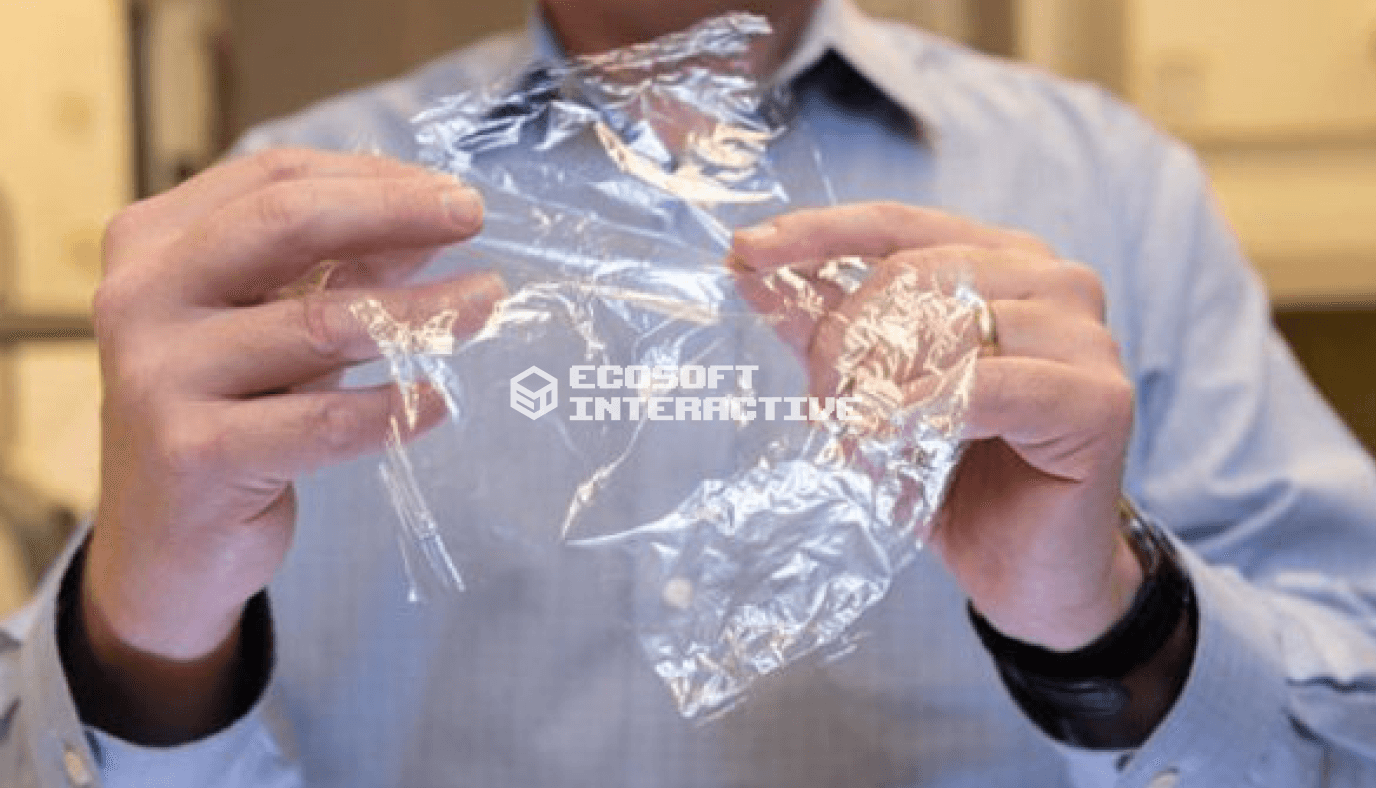
Biodegradable packaging film made from natural ingredients performs as well as conventional plastic while breaking down safely in the environment.
Biodegradable packaging film represents a breakthrough in sustainable materials. Researchers at Georgia Institute of Technology developed a thin film using cellulose, chitosan, and citric acid. These natural ingredients come from plants, mushrooms, and food waste. The new material blocks moisture and oxygen as effectively as traditional plastic.
Plastic packaging fills landfills and pollutes oceans worldwide. Traditional plastics take centuries to break down. This creates lasting environmental damage. Industries have tried to adopt renewable packaging materials. But earlier attempts failed to keep out moisture and oxygen effectively.
Blocking these elements matters for protecting food, medicines, and electronics. Products spoil or degrade when exposed to moisture or oxygen. Packaging must create an effective barrier. Previous plant-based materials weakened when humidity increased.
The researchers led by Carson Meredith from Georgia Tech’s School of Chemical and Biomolecular Engineering published their findings in ACS Applied Polymer Materials in November 2025. The study shows how natural materials can replace conventional plastics without sacrificing performance. The plant-based packaging film uses ingredients already abundant in nature.
Cellulose provides structure to the film. This substance gives plants their strength and rigidity. Chitosan comes from crustacean shells or mushroom cell walls. Food waste from seafood processing supplies this ingredient. Citric acid from citrus fruits completes the formula.
The team discovered that blending these three components creates exceptional barrier properties. But the breakthrough came from how they processed the materials. Researchers crosslink the ingredients chemically. This connects molecules in a network. They then apply heat treatment.
This combination creates a thin film with remarkable properties. The biodegradable packaging film reduces both moisture and oxygen transmission. It works even in hot, humid conditions. Tests simulated tropical environments with high heat and moisture. The film maintained its protective barrier throughout.
Yang Lu worked as a postdoctoral researcher in Georgia Tech’s chemical engineering program. Lu explained that the molecular organization makes the difference. When cast into thin films, the ingredients arrange themselves at the molecular level.
This self-organization produces a dense, ordered structure. The arrangement resists swelling or softening even under high humidity. Traditional biopolymers absorb water and lose their barrier properties. The new plant-based packaging film solves this problem.
The barrier technology contains three primary components working together. A carbohydrate polymer provides the base structure. A plasticizer maintains flexibility so the film does not become brittle. A water-repelling additive resists moisture penetration.
Testing revealed impressive results. Even at 80%t relative humidity, the films showed extremely low oxygen permeability. Water vapor transmission remained minimal. Performance matched or exceeded by common plastics used in packaging today, such as polyethylene terephthalate (PET) and polyethylene vinyl alcohol (EVOH).
The natural packaging film offers advantages beyond environmental benefits. The materials naturally degrade in the environment. They break down into harmless components. This eliminates the centuries-long pollution created by conventional plastics.
Food companies face growing pressure to adopt sustainable packaging. Consumers increasingly demand environmentally responsible products. Regulatory requirements for plastic reduction continue to expand. The biodegradable packaging film provides a practical solution.
Pharmaceutical companies need reliable moisture barriers for medicines. Electronics manufacturers require protection from oxygen and humidity. Both industries could benefit from switching to plant-based materials. The new film meets their technical requirements while reducing environmental impact.
Mars Inc. supported the research financially. The company manufactures packaged foods, including candy bars and pet food. Their interest reflects commercial viability for the plant-based packaging film. Georgia Tech’s Renewable Bioproducts Institute also provided funding. The U.S. Department of Defense contributed through a graduate fellowship program.
Manufacturing costs remain an important factor for adoption. Traditional plastics benefit from decades of industrial optimization. Production costs have dropped dramatically over time. Plant-based materials must compete economically to gain market share.
However, environmental costs tell a different story. Plastic pollution creates expenses for cleanup and ecosystem damage. Microplastics enter food chains and drinking water. These hidden costs do not appear in product prices. Plant-based packaging film eliminates these long-term environmental expenses.
The film’s raw materials come from abundant sources. Cellulose is the most common organic polymer on Earth. Plants produce it continuously through photosynthesis. Chitosan comes from seafood processing waste that currently goes unused. Citric acid production is well established in the food industry.
Supply chains for these materials already exist. Scaling up production would not require entirely new infrastructure. This contrasts with some sustainable materials that need dedicated cultivation or processing facilities. The biodegradable packaging film builds on existing agricultural and food processing systems.
Agricultural waste could provide feedstock for production. Corn stalks, wheat straw, and other crop residues contain cellulose. Using these materials creates value from what farmers currently leave in fields or burn. It provides additional income while reducing waste.
The technology addresses multiple environmental challenges simultaneously. It reduces plastic pollution while utilizing food waste. It creates biodegradable alternatives without sacrificing performance. These multiple benefits make the plant-based packaging film particularly promising.
Further development will refine manufacturing processes and reduce costs. Pilot production could demonstrate commercial viability. Early adopters may accept slightly higher costs for environmental benefits. As production scales, prices typically decrease.
The Georgia Tech breakthrough demonstrates that sustainability and performance need not conflict. Biodegradable packaging film proves that natural materials can match synthetic ones. This achievement opens doors for additional bio-based innovations in packaging and beyond.
Comments