Nature
News
By
Sean Beck
Nov 11, 2025
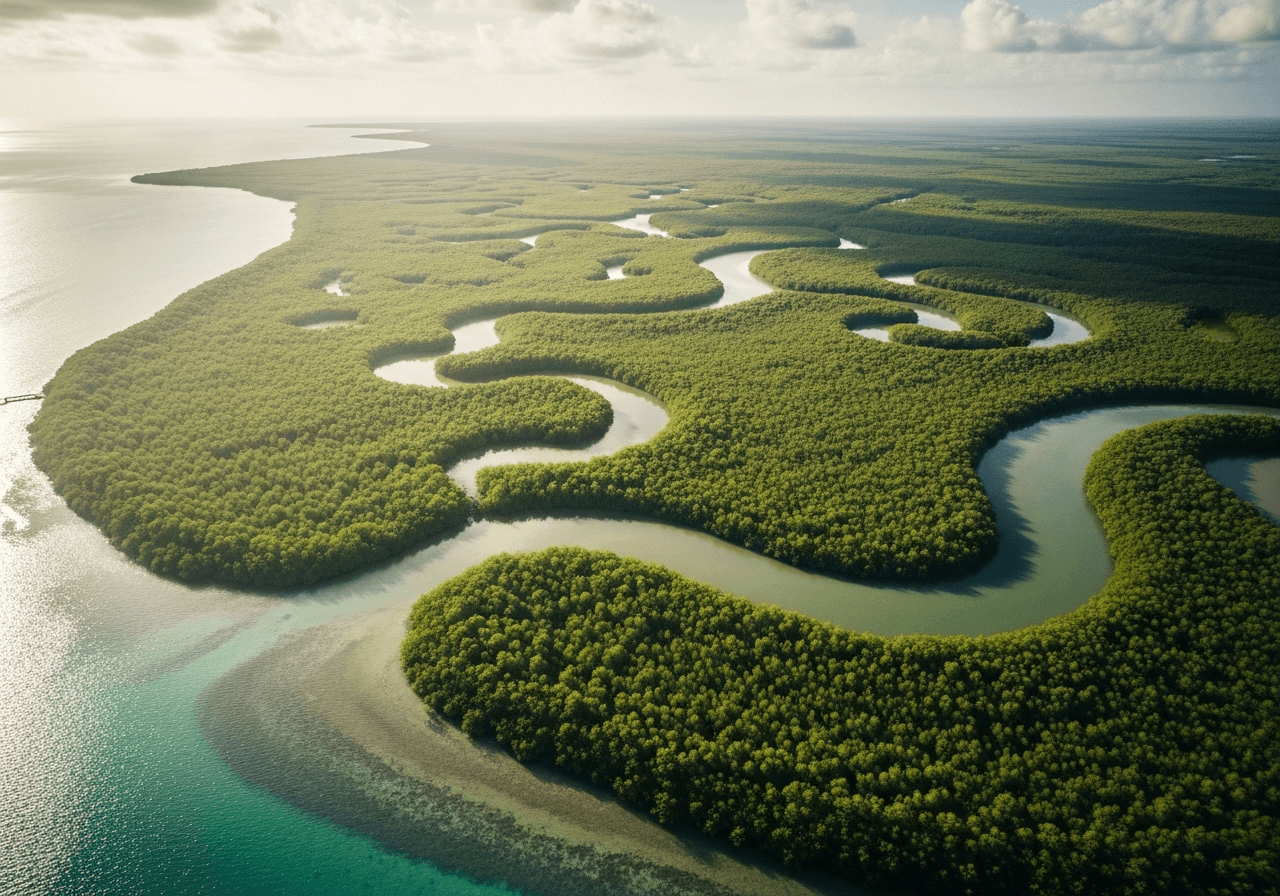
Mangroves are often overlooked in the global conversation about climate change, but these unique coastal forests play a vital role in fighting global warming. Stretching along tropical and subtropical coastlines, mangroves act as natural barriers between land and sea — and more importantly, as powerful carbon sinks that trap massive amounts of greenhouse gases.
Nature’s Carbon Vaults
Scientists have discovered that mangrove ecosystems can store up to ten times more carbon per hectare than most terrestrial forests. This is because their dense root systems trap organic material — leaves, branches, and soil carbon — in oxygen-poor mud, preventing it from decomposing quickly. The result is a long-term carbon storage system, often referred to as “blue carbon”, which remains locked away for centuries beneath the coastal sediments.
This process doesn’t just happen on the surface. A large portion of the carbon mangroves store lies below ground, where their roots extend deep into the mud and trap nutrient-rich materials that would otherwise enter the ocean.
Guardians of the Coastline
Beyond their carbon-capturing superpowers, mangroves serve as natural shields for coastal communities. Their tangled roots dissipate wave energy, reducing erosion and protecting shorelines from storm surges and tsunamis. During severe weather events, villages surrounded by healthy mangrove forests often suffer significantly less damage than those without them.
Mangroves are also home to a variety of marine and terrestrial species — from colorful fish and crabs to migratory birds and reptiles. In many regions, they form the foundation of coastal biodiversity and sustain local economies through fishing and ecotourism.
A Disappearing Defender
Despite their importance, mangroves are disappearing three to five times faster than forests on land due to coastal development, aquaculture, and pollution. Since 1980, more than 35% of the world’s mangrove cover has been lost — a devastating blow to both biodiversity and climate resilience.
Organizations and governments are now prioritizing mangrove restoration as part of their climate adaptation strategies. Replanting mangroves not only revives coastal ecosystems but also rebuilds natural carbon banks essential for achieving global emission targets.
A Call to Protect Blue Carbon
Preserving mangroves isn’t just about saving trees — it’s about securing our planet’s natural defense system. As sea levels rise and climate change accelerates, the survival of mangrove forests will determine how well many coastal communities adapt to the future.
Protecting these ecosystems means supporting initiatives that limit coastal deforestation, promote sustainable fisheries, and encourage local stewardship. In the fight against climate change, the humble mangrove might just be one of our greatest allies.
Comments