World
Nature
By
Sean Beck
Nov 4, 2025
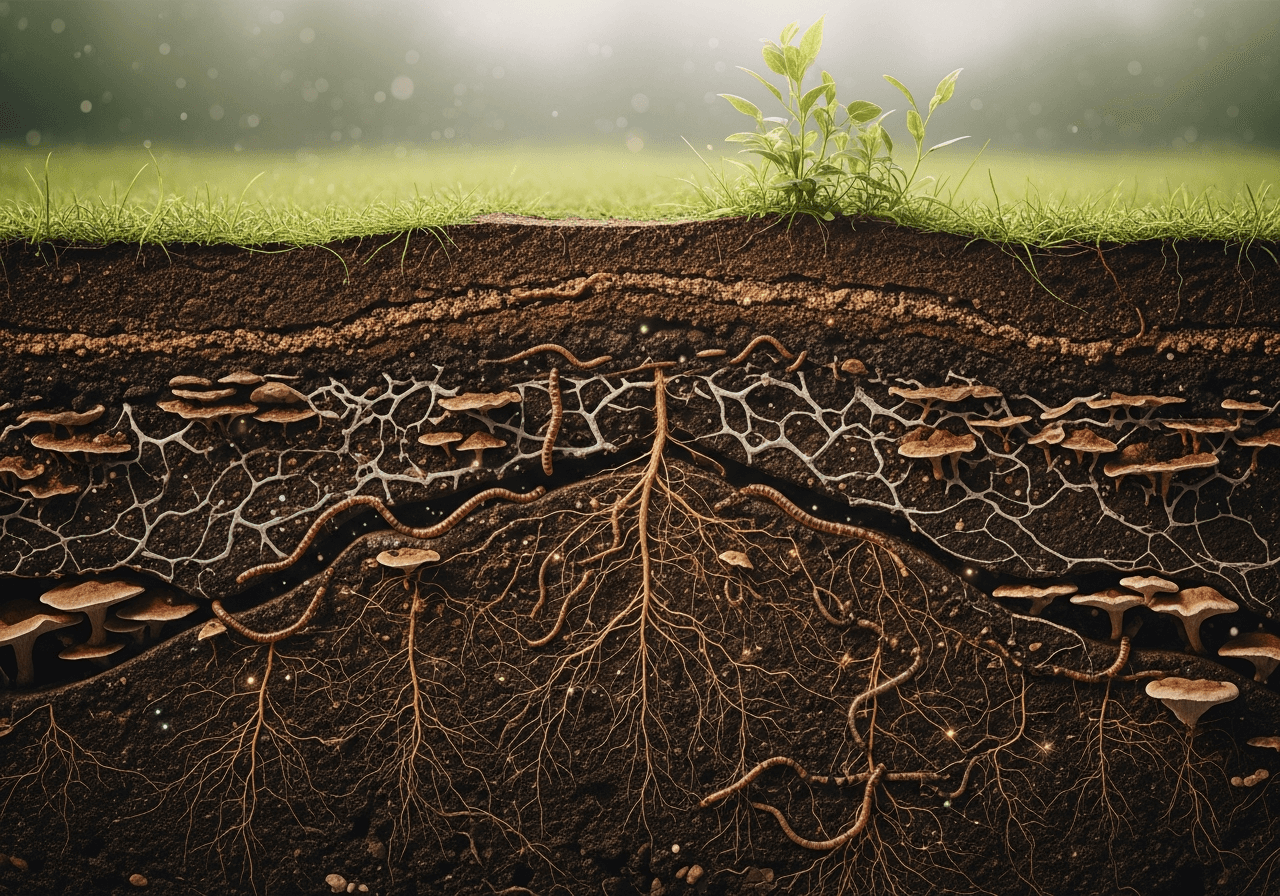
When we think about wildlife and biodiversity, our minds usually jump to lush rainforests, colorful coral reefs, or towering mountains. Yet one of the most diverse ecosystems on the planet is found in a place most of us rarely notice: the soil beneath our feet.
Scientists estimate that around 59% of all species on Earth live underground. This hidden universe is filled with a fascinating mix of life, from bacteria and fungi to insects, worms, nematodes, and even plant roots interacting in complex networks. Soil is not just dirt. It is a living, breathing community supporting life above and below the surface.
Inside healthy soil, billions of microorganisms work quietly every day. They recycle nutrients, break down dead organic matter, and help plants grow by delivering minerals and improving soil structure. Fungi form networks that allow trees to communicate and share nutrients, while earthworms create tiny tunnels that aerate the soil and help water flow. Even microscopic bacteria play essential roles in fixing nitrogen, a nutrient plants cannot survive without.
This underground biodiversity doesn’t just keep forests and fields alive. It also helps regulate the climate by storing carbon, supports food systems by enriching farmland, and protects plants from disease. In many ways, soil life acts like the Earth’s life-support system, operating silently and steadily beneath us.
Yet despite its importance, soil ecosystems are under threat. Pollution, pesticides, monoculture farming, and land degradation continue to reduce soil biodiversity worldwide. Once soil loses its living community, it becomes weaker, less fertile, and more vulnerable to erosion and climate change.
Remember this next time you see a patch of earth. Beneath every step lies an entire world buzzing with activity, forming the foundation of life on our planet. Protecting soil means protecting the future — for plants, animals, and us.
Comments